OEMs and Tier-1 suppliers are focused on customer satisfaction enhancement, after-sales service, and fleet uptime. Ironically, despite all these concerns, most of the dealers face poor visibility, manual processes, and slow communication that may weaken trust and loyalty even further.
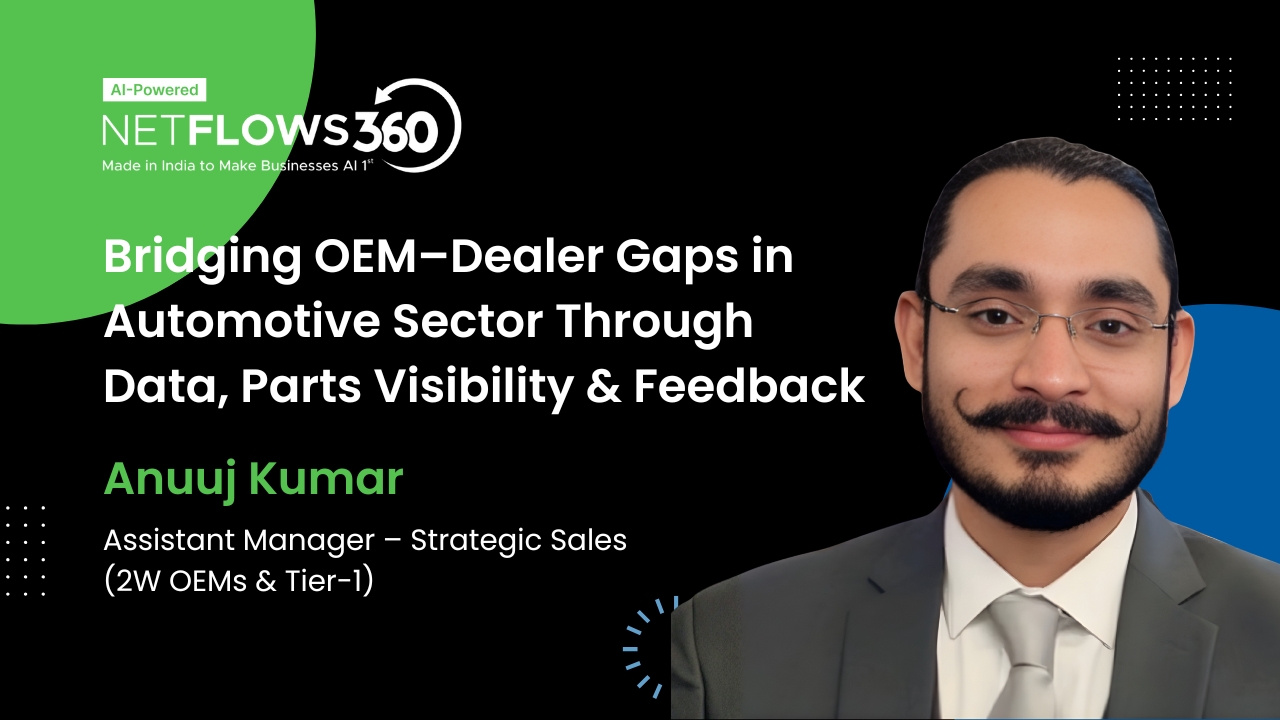
Anuuj Kumar has been a key player in the formulation of EV manufacturing and supplier systems. He comes with a strong expertise in sourcing, scaling operations, and improving services that will enable companies to build networks that will enhance customer trust in the changing mobility landscape.
Here are his key perspectives.
Q1. What are the major problems that you’ve seen between OEM expectations and the realities dealers encounter daily?
Though OEMs rely heavily on KPIs and targets, dealers still experience a different set of challenges. The biggest gap is communication. Dealers are closest to customers — their concerns, their frustrations, and the actual service experience, but this feedback does not always reach OEMs with the same intensity. When OEMs listen actively and build trust-based relationships with dealers, execution improves much faster.
Q2. Batteries, components, and spares often create problems. So, how important is real-time visibility into parts, warranty, and service history?
It is absolutely essential. Customers may tolerate a delay once — but never the experience of uncertainty and broken communication. Real-time tracking of critical parts, warranty workflows, and service history ensures transparency. After-sales is what builds a brand — service delays and lack of information break it.
– Anuuj Kumar, Assistant Manager – Strategic Sales (2W OEMs & Tier-1)
Q3. OEMs still rely on manual or siloed feedback processes. What practical steps can help them transition to a connected, data-led workflow?
The transition must be simple. A KISS approach — Keep It Simple & Short. OEMs should design tools and report workflows that match dealer behavior instead of forcing new complexities. Mobile-first systems, voice-enabled updates, and WhatsApp-style interfaces ensure adoption because dealers already use them daily. Digital systems succeed only when they make life easier, not harder.
Q4. Where will the most value be created in improving the OEM-dealer coordination and customer experience?
Technology is key, but culture is important. Only then will the dealers stay motivated when OEMs build long-term relations, seamless support, and good service.
Wrapping Up
Anuuj works closely with India’s top 2W OEMs and Tier-1 suppliers, managing high-value relationships and ensuring the alignment of sales, service, and operational expectations. With experience across automotive, agriculture, and commercial vehicle segments, he brings on-ground insights into how OEMs and dealers can collaborate better to improve customer experience and long-term brand trust.